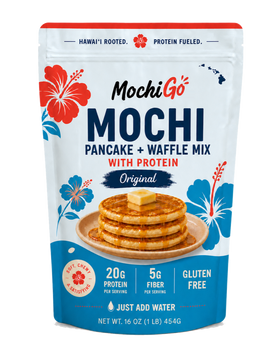
WHY MOCHIGO
What makes our mix different.
Mochi pancakes combine the familiar fluffiness of a classic pancake with the soft, satisfying chew associated with mochi. That distinctive texture comes from sweet rice flour, also called mochiko. Here’s what mochi actually is, how it became part of Hawaiʻi’s local food culture, and what makes a MochiGo pancake different.
We know what you’re thinking. Tiny colorful ice-cream balls. Cute little box. Usually gone approximately 45 seconds after opening.
That’s mochi ice cream, a scoop of ice cream wrapped in a thin layer of chewy mochi. The ice cream is the filling. The mochi is the soft, stretchy wrapper on the outside.
So no, mochi isn’t a type of ice cream. It’s the chewy part that makes mochi ice cream feel unlike anything else in the freezer aisle. And it existed for centuries before anyone thought to wrap it around a scoop.
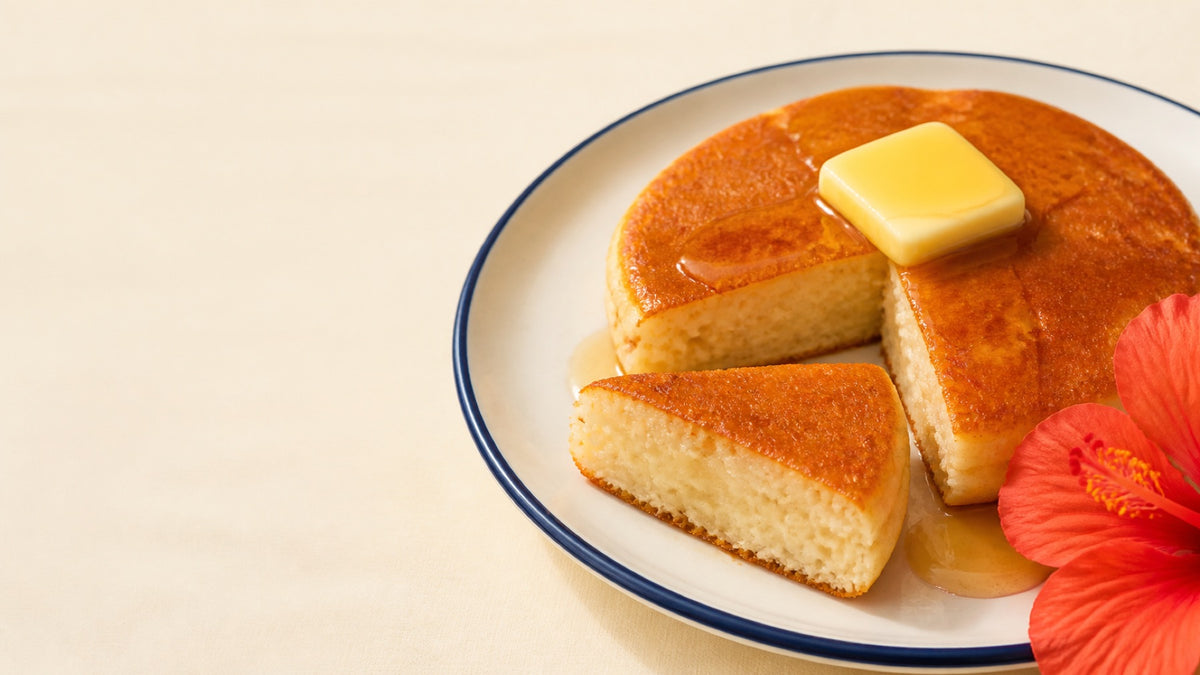
MOCHI ISN’T THE ICE CREAM. IT’S THE CHEWY PART WRAPPED AROUND IT.
Traditional Japanese mochi is made from a short-grain glutinous rice, sometimes sold as sticky rice or sweet rice. The rice is steamed and then pounded, traditionally with wooden mallets, in a communal event called mochitsuki, until the grains break down into something smooth, stretchy and dense.
Modern mochi-style baking usually takes a shortcut. Instead of pounding whole rice, it uses sweet rice flour, most often sold under the name mochiko. The flour delivers that same signature chew while behaving like a flour. Which is what makes it possible to bake with, and to build a pancake and waffle mix around.
That distinction matters: traditional mochi is pounded rice. Mochi-style baked goods are made with sweet rice flour. Both give you the chew. Only one of them fits in a mixing bowl before breakfast.
It starts with glutinous rice, sticky, short-grain, and nothing like long-grain table rice.
Traditional mochi is steamed, then pounded until smooth, stretchy and chewy.
Modern baking uses mochiko: the same rice, milled into a flour you can bake with.
From savory to sweet, mochi shows up across Japanese and Hawaiʻi kitchens in dozens of forms.
No. This is one of the most common questions about mochi, and the confusion is entirely reasonable. The word certainly looks like it should mean gluten.
“Glutinous” describes the rice’s sticky, glue-like texture when cooked. It has nothing to do with gluten, the protein found in wheat, barley and rye. Rice is naturally gluten free, and so is the sweet rice flour milled from it.
One caution worth stating plainly: a naturally gluten-free ingredient and a verified gluten-free packaged product are not the same thing. A finished product’s gluten-free status depends on every ingredient in the blend, the facility it’s made in, and any testing required to support the claim. MochiGo’s formula is still in development, and we’ll say exactly where we land once it’s final.
A mochi pancake is a pancake built around sweet rice flour rather than relying entirely on wheat flour.
On its own, sweet rice flour would give you something dense and stretchy, closer to a rice cake than to breakfast. So it’s balanced with leavening and other ingredients that give the batter lift, producing something considerably lighter than traditional mochi while keeping the chew that makes mochi worth eating in the first place.
A mochi pancake isn’t a rice cake shaped like a pancake. It’s a genuinely fluffy pancake with a soft, springy center and a balanced mochi chew.
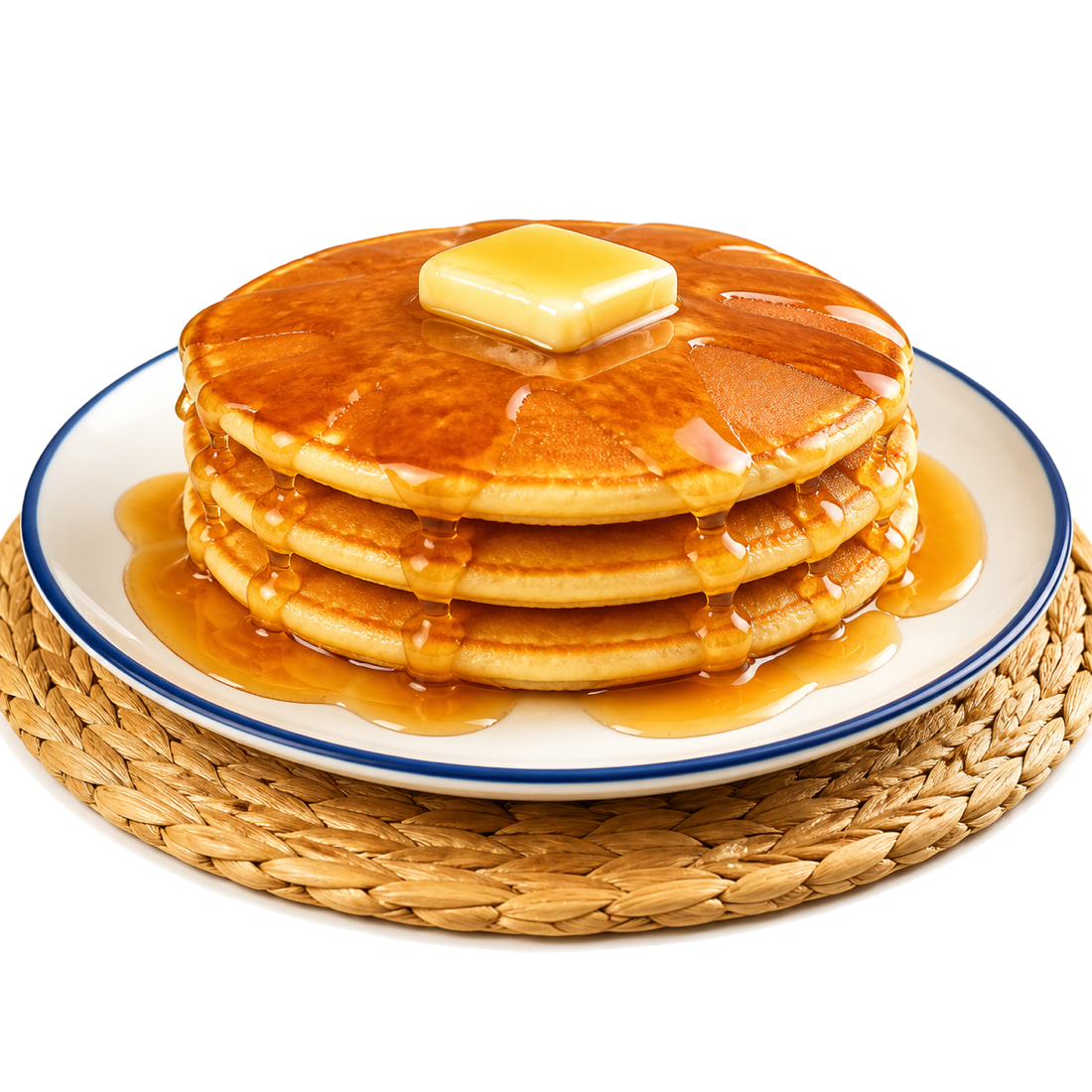
SWEET RICE FLOUR

SIGNATURE MOCHI CHEW

PANCAKES & WAFFLES


THE FLUFFINESS OF A PANCAKE.
THE SATISFYING CHEW OF MOCHI.
Milder than you might expect, and that’s rather the point.
Sweet rice flour has a gentle, faintly sweet flavor. It contributes far more texture than taste, so it doesn’t make breakfast taste like a bowl of rice, and it doesn’t compete with whatever you put on top.
What you notice first is familiar: a warm pancake, much like the one you grew up with. What you notice second is the middle: softer, springier and chewier than an ordinary pancake, without tipping over into gummy or heavy. Because the base is mild, it leaves room for the flavors we’re still developing to come through clearly.
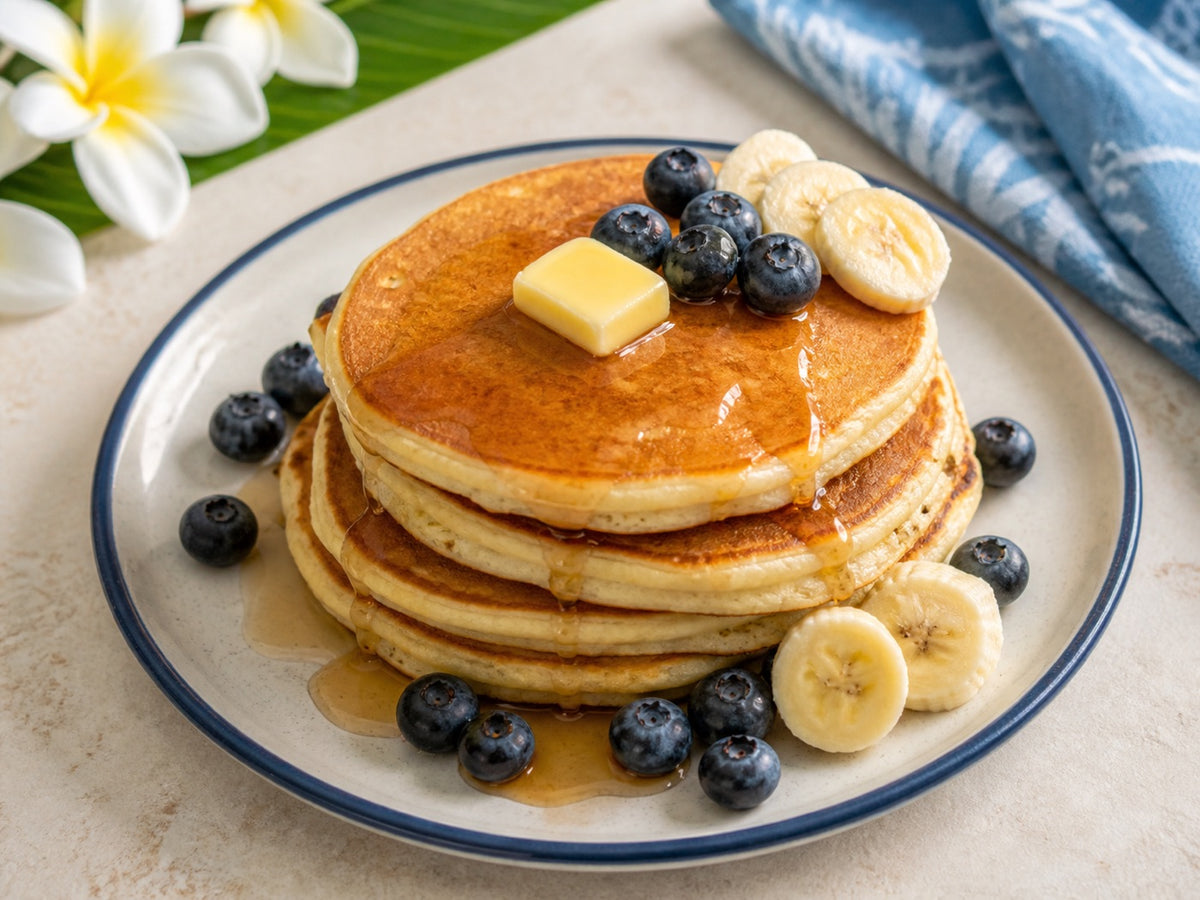
If you’ve never eaten one, here’s what to expect, and what should tell you something has gone wrong.
Expect:
Don’t expect: gummy, rubbery, heavy or overly dense. It shouldn’t stretch like melted cheese or bounce off the plate. And it certainly shouldn’t taste like the dry, chalky protein pancakes people have learned to put up with.
The chew should complement the fluffiness, never overpower it. Fluffy enough to stack. Chewy enough to remember.
Ordinary mixes give you lift without chew. Other mochi mixes give you chew without protein. MochiGo is built to sit in the middle.
| Attribute | Ordinary pancake mix | The middle groundMochiGo | Other mochi mixes |
|---|---|---|---|
| Real mochi chew | No | Yes | Yes |
| Added protein | Sometimes | Yes | No |
| Pancakes and waffles | Sometimes | Yes | Sometimes |
| Texture once syrup lands | Softens quickly | Holds its chew | Dense and sticky |
| Eaten as | Everyday breakfast | Everyday breakfast | A sweet, in small pieces |
Comparison describes product categories, not specific brands. Protein content per serving will be published once our nutrition panel is final.
Push it too far one way and you’ve made an ordinary pancake. Too far the other and you’ve made a rice cake on a plate.
A classic pancake is built for softness and lift. It’s tender, airy, and more or less dissolves as you eat it. Traditional mochi sits at the opposite end: dense, stretchy and deliberately chewy, meant to be eaten slowly and in small pieces.
A mochi pancake belongs in the middle, and that position is deliberate rather than accidental. It should rise and eat like a pancake, then surprise you in the centre with a chew a wheat pancake simply cannot produce.
Mochi arrived in Hawaiʻi with people, not with a trend.
From 1885, thousands of Japanese immigrants came to work the sugar plantations, bringing rice, soy sauce, miso, and mochi. By 1924 they and their children were roughly 40 percent of Hawaiʻi’s population, and their food became part of everyday local eating rather than a cuisine kept separate from it.
Two things carried through. Mochitsuki, the New Year’s mochi pounding still held across the islands. And butter mochi, a soft, chewy baked square made with mochiko that turns up at every potluck and bake sale.
MochiGo comes out of that lineage, and out of Brittany’s own connection to the islands.

No, and we’d rather say so plainly.
MochiGo is not traditional Japanese mochi, and it isn’t trying to replace it or to represent every form mochi takes. Traditional mochi is pounded rice, made a particular way, carrying real cultural meaning.
MochiGo is a modern pancake-and-waffle mix that uses sweet rice flour to bring mochi’s recognizable texture into an everyday breakfast. It’s shaped by Japanese culinary tradition, by Hawaiʻi’s local food culture, by Brittany’s connection to the islands, and by our own goal of making a breakfast worth getting up for.
Rooted in something real. Made for how we eat now.
Because we didn’t want MochiGo to be a novelty you try once and forget.
A pancake that’s fun to eat is a weekend thing. A pancake you can genuinely reach for on a Tuesday, before work, after training, in the middle of a rushed morning, has to do more than taste good.
Protein is what makes it that. But it should never come at the expense of the food itself, which is exactly where most protein breakfasts go wrong: they treat texture as the thing you sacrifice.
Taste and texture earn the first bite. Protein earns a place in your routine.
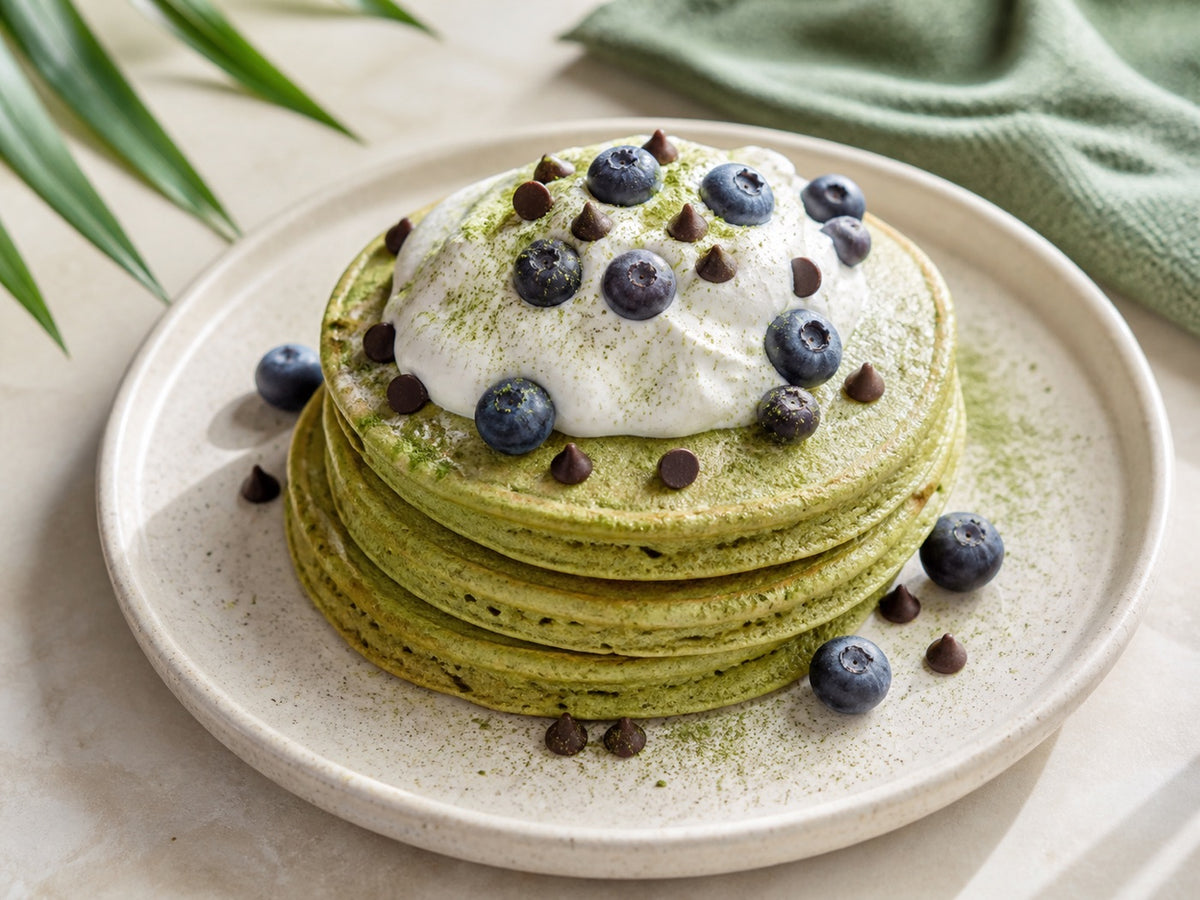
What makes our mix different.
Water. Mix. Mochi. That's it.
Ways to top, stack, and share.
Every question, answered in one place.
Join the waitlist for early access when MochiGo launches.